
Tazewell Parole and Probation Compared
Parole is conditional release from prison for a person who is legally eligible. The Virginia Parole Board decides whether to grant parole in an eligible case. VADOC then sets and carries out the release date and supervises the person in the community. Probation is supervision imposed by a court, often as part of a sentence with time suspended or after a term of confinement. VADOC Probation & Parole administers adult community supervision in both settings. In Tazewell County, District 43 is the local VADOC office.
Virginia generally ended ordinary discretionary parole for felonies committed on or after January 1, 1995, subject to the exceptions in Virginia Code § 53.1-165.1. That rule does not end probation. It also does not erase parole for older eligible terms or a statutory exception. The case dates and governing sentence matter.
| Status | Who creates it | Best verification | How it ends |
|---|---|---|---|
| Parole | Virginia Parole Board decision, followed by VADOC execution | Board report plus VADOC locator and signed Conditions of Parole | Formal discharge, not mere locator disappearance |
| Probation | Sentencing court order | Court order, VADOC locator, and signed Conditions of Probation | Court or VADOC discharge record, as applicable |
- Parole
- Conditional community release from a parole-eligible prison term.
- Probation
- Court-ordered community supervision tied to a criminal sentence.
- Discharge
- A documented end to custody or supervision authority.
- Absconder
- A person alleged to have stopped reporting or left supervision without permission.
Note: Probation can apply when ordinary discretionary parole does not, so verify the controlling court order and offense dates.
Verify Tazewell Post-Release Supervision
Begin with the VADOC Inmate and Supervisee Locator. It accepts the first three letters of a first name and the full last name, or a seven-digit DOC number. Optional age, location, race, and gender filters can separate similar names. VADOC says the locator is updated daily but may be inaccurate or out of date. A result assigned to a probation and parole district supports active community supervision. An institution result means the person remains in state custody.
- Search with the seven-digit DOC number when available. Otherwise, use the required name fields and compare all identifiers.
- Read the location and status together. District 43 suggests community supervision; Pocahontas State Correctional Center means prison custody.
- Match the result to the sentencing court's probation order or the signed Conditions of Probation or Parole.
- Contact the listed district to confirm which office holds the record. Staff may limit details about schedules, residence, or case notes.
- For supervision that has ended, request the actual discharge record. Do not treat a no-result as proof of completion.
The locator is a current-status tool, not a complete archive. A person may have served only a local jail term, may appear under a different spelling, or may have completed all VADOC authority. Tazewell court records can identify a probation order. The signed release conditions identify parole or probation after a state-prison release. The full Tazewell County custody search and local release-record route are covered on the released-inmate search page.
The official VADOC locator page shows its search fields and daily-update warning.
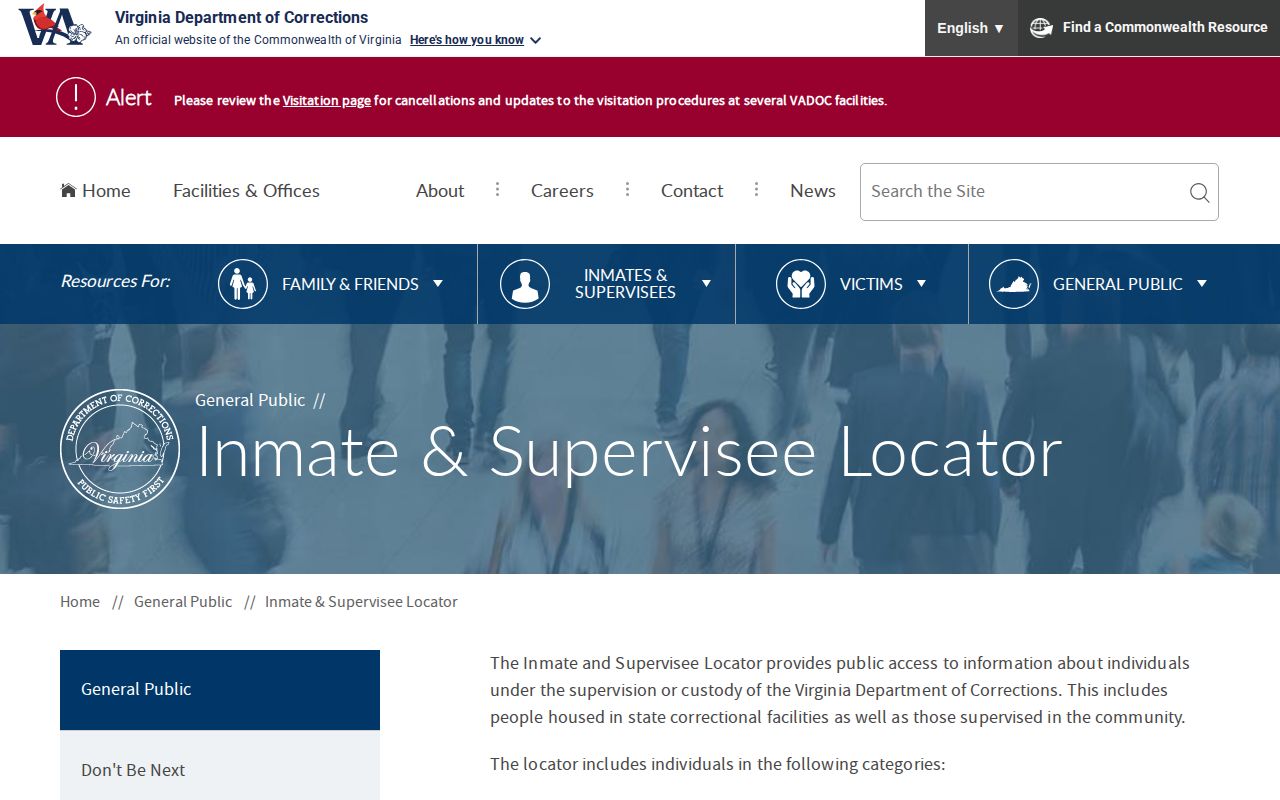
That warning is why a current locator result should be checked against the court order or signed supervision conditions when exact legal status matters.
Tazewell Supervision Through District 43
VADOC Probation & Parole District 43 serves Tazewell and Buchanan counties. Its office is at 134 Taylor Road, Cedar Bluff, VA 24609, and its phone number is (276) 963-3092. Mail goes to P.O. Box 363, Pounding Mill, VA. The current state directory names Chris Shortt as chief. An assigned district, not the county where the case began or where a person once lived, determines the correct supervision contact.
District staff can identify the office that maintains a supervision record. They may not release reporting times, home addresses, internal risk material, or case notes. Adult probation and parole files may be withheld under Virginia Code § 2.2-3706(B)(6). The public locator, sentencing order, signed conditions, and formal discharge record are the sounder public routes.
The VADOC offices directory places District 43 and Pocahontas State Correctional Center within the state system.
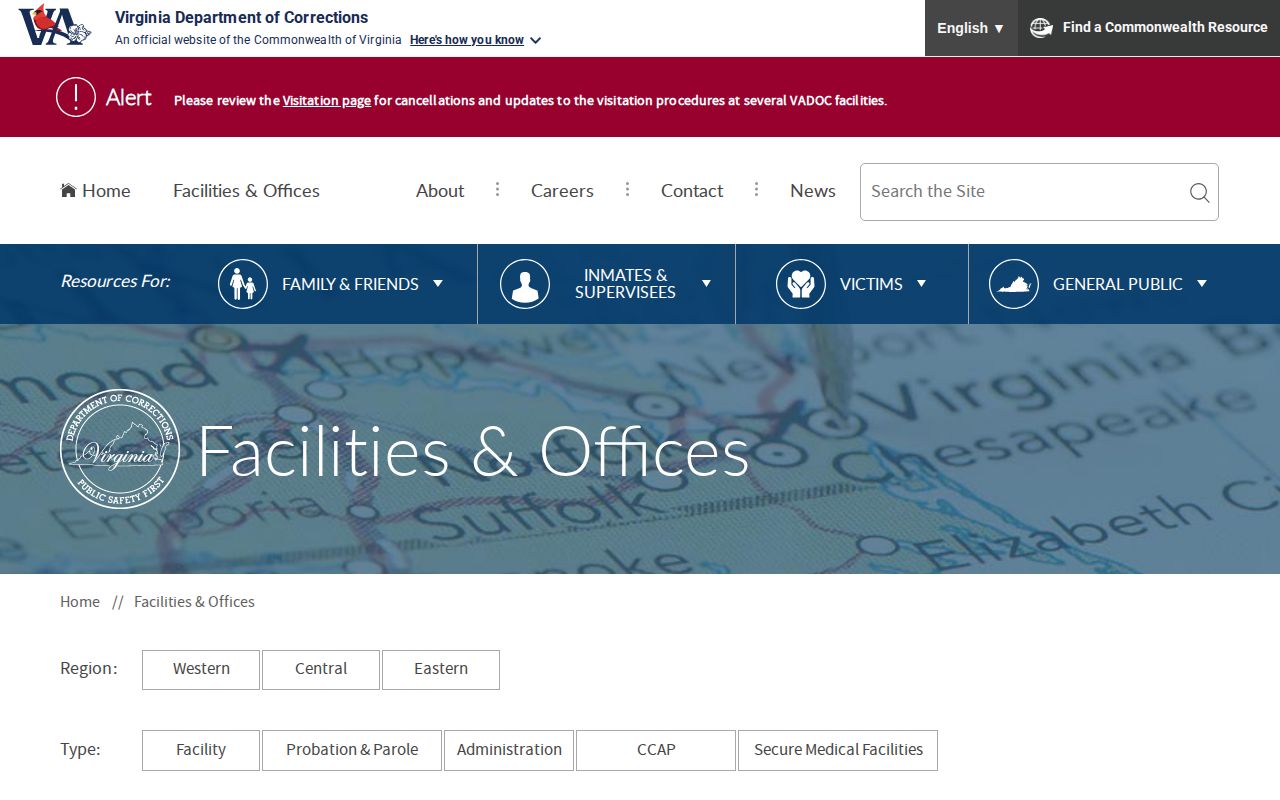
The directory helps distinguish a district-office result from an institution result, which is essential when deciding whether the person is in the community or still confined.
Tazewell Parole Decisions and Release
The Virginia Parole Board decides eligible parole matters. It does not supervise Tazewell County parolees day to day. Its public-meetings calendar is rolling and meeting-specific, not a guaranteed weekly or monthly inmate docket. It provides the next public meeting, an agenda when posted, a hearing link, and prior minutes. Since July 1, 2024, the Board states that final deliberation and votes on grants occur in public meeting.
Monthly decision PDFs are posted in the Parole Board reports. Search a report by the person's name or DOC number. Published categories can include Grant, Not Grant, Continue on Parole, and violation-related language. Quote the report's actual term. Under § 53.1-136, the prior month's report is due by the fifteenth day and carries identifying, sentence, reason, decision, and vote data.
The Board calendar below is the source for public-meeting timing and posted agendas.

Meeting activity establishes Board process. It does not show that a person has walked out of a VADOC institution.
A monthly report can carry the person's name, DOC number, case type, decision and certification dates, reasons, estimated time served, jurisdiction, offenses, judgment date, imposed and suspended sentence, and Board votes. Those fields help match the right case and explain the decision. They do not replace a VADOC release date. For parole-eligible terms, § 53.1-151 also uses different eligibility points for first and later commitments, with separate rules for life and specified serious or repeat cases. Eligibility only opens the Board process.
The monthly decisions page organizes those reports by month and year.
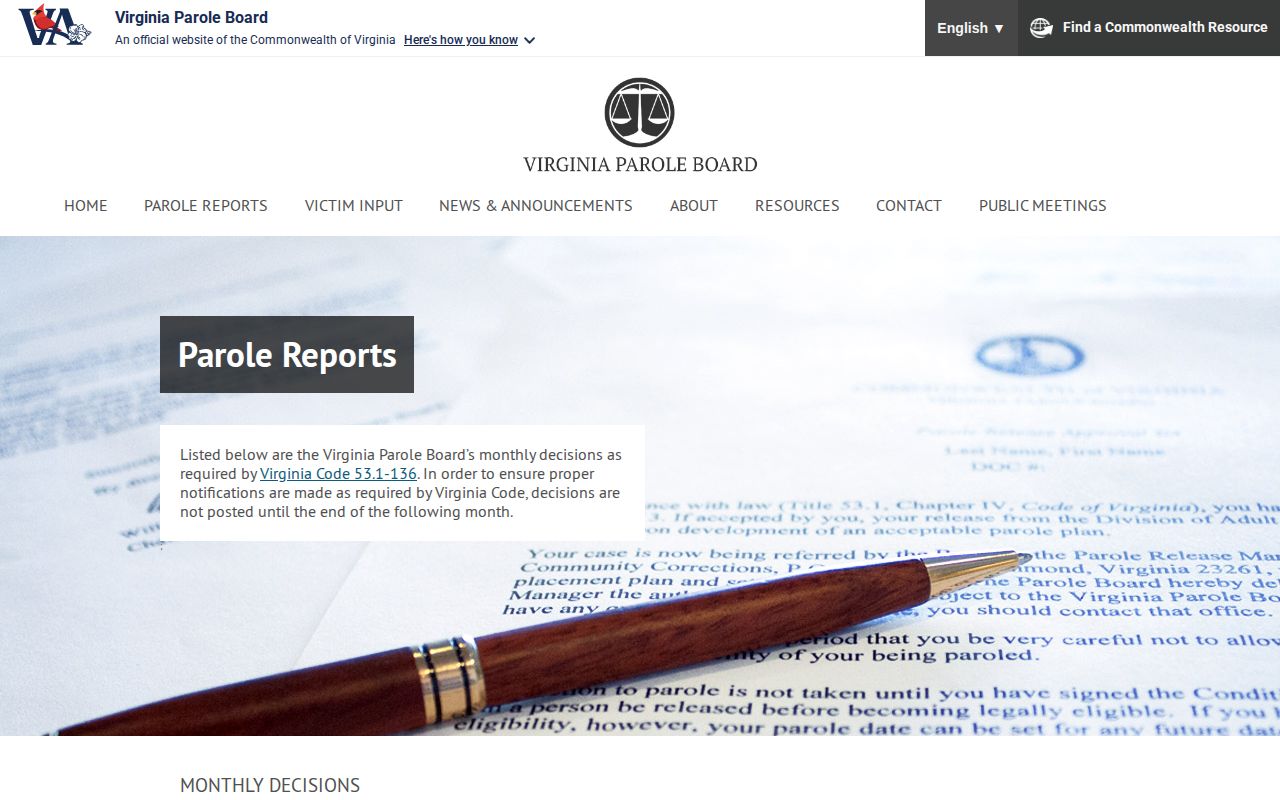
The published report helps verify Board action, while VADOC status and release papers establish whether and when the later custody exit occurred.
Tazewell Supervision Violations and Warrants
Conditions can require reporting, lawful conduct, approved travel, program participation, or other terms written in the person's order. The signed conditions control. A claimed violation may lead to a district response, a warrant, a revocation hearing, or return to custody, but an allegation is not itself a final finding. Court and VADOC records should be read in sequence.
An absconder label means alleged failure to remain in contact or comply with supervision. VADOC's Most Wanted resource may provide a public lead. No official Tazewell County or District 43 absconder list was identified. Absence from a list does not prove compliance, discharge, or lack of a warrant. Likewise, a VINE alert concerns a jail custody event. It is not a substitute for probation or parole status.
Note: Absence from a public wanted list cannot establish compliance, discharge, or the absence of an active supervision warrant.
Tazewell Release Handoffs and Resources
A 2025 Virginia Tech and Project13Three Tazewell County needs assessment describes fragmented handoffs when people are released, bonded, or transferred. It also identifies transport as a rural barrier and recommends more coordinated release planning. That local context matters because leaving SWVRJA, entering District 43 supervision, and reaching a service provider may happen through separate systems.
The District 43 resource directory provides a local navigation layer for people supervised in Tazewell and Buchanan counties. Use current agency contacts to plan a handoff. The directory does not decide whether parole was granted, whether a jail release occurred, or whether supervision has ended. Those facts still come from the responsible official record.
Tazewell Release Records After Jail
SWVRJA has an unusual after-release option for a former inmate's own communications. Its inmate-mail page says a former inmate may use the inmate number and password to log into SmartInmate and download personal photos, messages, and scanned postal mail without charge. Scanned-mail originals are destroyed after 30 days. This is personal communications recovery. It is not a public booking-photo search or proof of parole or probation.
The same local assessment reports concern about people leaving custody without identity documents. A supervision record and a personal document are different. District 43 can address the supervision file. SWVRJA controls its jail communications system. A court clerk controls the sentencing order. Keeping those custodians separate reduces delay during an already fragmented release handoff.
Ending Tazewell Post-Release Supervision
Supervision ends through a formal legal or administrative event. A parole or probation term can reach discharge, be altered by a court, or be interrupted by violation proceedings. Locator disappearance alone is weak proof because the state does not promise a permanent archive of fully discharged people. Obtain the final discharge record or applicable court order.
Do not merge release from confinement with discharge from supervision. A person may leave Pocahontas State Correctional Center and remain on parole or probation at District 43. A person may leave SWVRJA on bond while a Tazewell case remains pending. Only the dated records for each stage can show when prison custody, jail custody, and community supervision began or ended.
When a record is unclear, ask for one identified document rather than an entire supervision file. A sentencing order can establish probation. Signed Conditions of Parole can establish the status after prison release. A final discharge record can establish the end. Narrow requests also respect the statutory limits that may protect adult supervision files while still seeking the public fact needed to verify the legal stage.
Note: Release from confinement and discharge from supervision are separate events that require separate dated records from the responsible offices.