
Tazewell 72-Hour Release List Status
No separate official SWVRJA page lists releases from the Tazewell Adult Detention Center over a rolling three-day period. The authority publishes a Current Facility Inmates page that links to JailTracker. That wording sets the scope. The roster is a snapshot of people in custody, not a history of people who exited during a 72-hour window.
SWVRJA does not state how often the current roster refreshes. It publishes no released-person archive, no release-field list, and no promise about how long an exited record remains visible. It also gives no public retention term for the underlying release event. Those gaps make roster subtraction unreliable. Comparing a list from Monday with a list from Friday cannot show whether a missing person was released, transferred, or affected by another status change.
The authority's own current-inmate landing page shows why the live roster must keep its current-custody label.
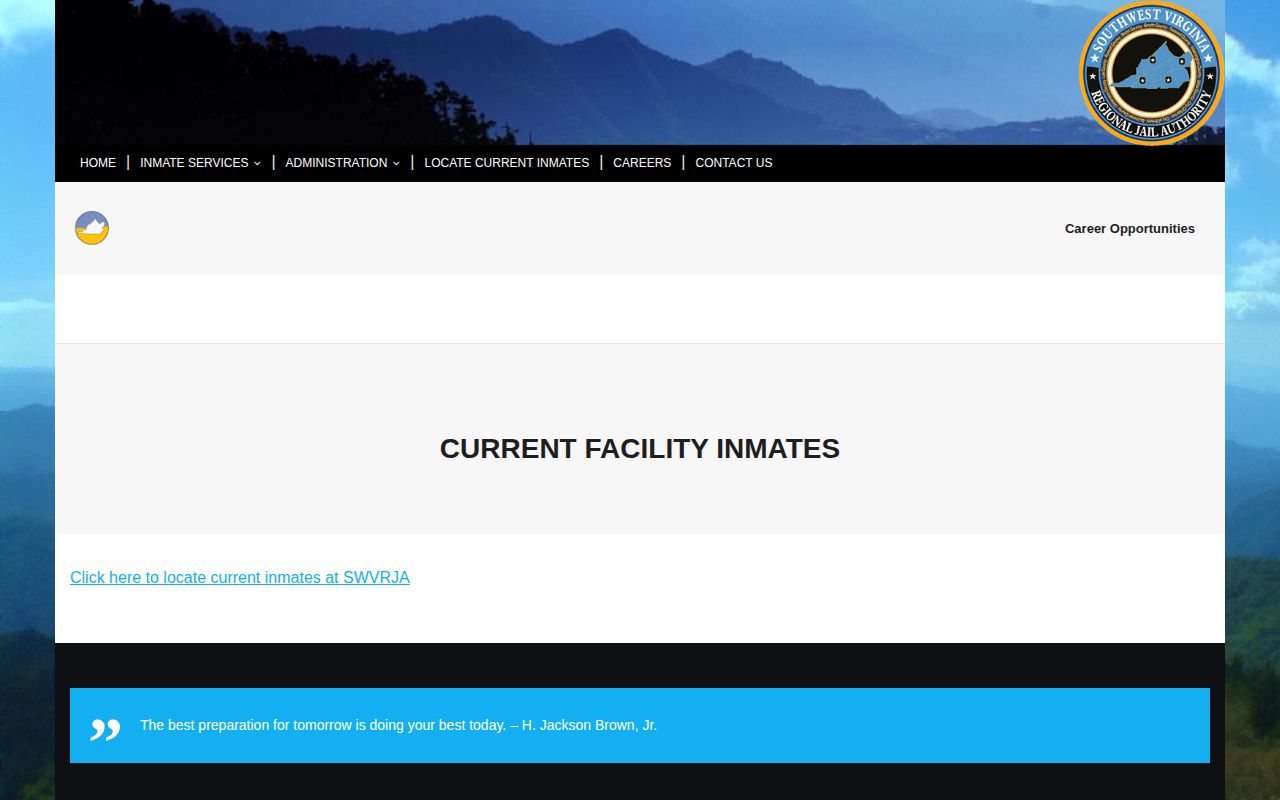
This source supports a starting check for present custody, while VINE, courts, and SWVRJA records supply the three-day event evidence.
If a request produces no record, verify the facility, date range, and spelling before drawing a conclusion. SWVRJA, the Sheriff, VADOC, and the courts hold different record families, so a negative response from one custodian does not establish that no custody event occurred.
Note: Preserve the first and last query times because SWVRJA publishes no roster refresh schedule for reconstructing the interval.
Build a Tazewell Three-Day Window
A useful 72-hour check begins with two exact timestamps, including the local time zone. “Over the weekend” is not precise enough when an event occurred late Friday or early Monday. Save the date and time of each search. Use the same identifying details in every system so a similar name does not turn into a false match.
- Set the start and end of the exact 72-hour interval to be checked.
- Review SWVRJA's current roster only to identify who is still listed at the time of the check.
- Collect VINELink events received or found during that interval, preserving the facility, event type, and timestamp.
- Search the Tazewell court docket for bond, dismissal, sentencing, or final-order activity within and just before the interval.
- Ask SWVRJA for existing Tazewell facility release events between the two timestamps and request the relevant fields.
VINE should ideally be registered before the expected release because it is an event notification system, not a durable archive. If an alert says transfer, the person remained in custody. If it says release, facility confirmation is still useful when another hold or receiving authority may be involved.
For same-day activity rather than a multi-day reconstruction, the Tazewell County 24-Hour Release List method narrows the interval and prioritizes immediate confirmation.
Tazewell 72-Hour Release Fields
There is no public SWVRJA 72-hour table to read. The proper field inventory therefore describes what to request from existing release events. It must not be presented as data displayed by JailTracker.
| Field | Role in a three-day check |
|---|---|
| Full booked name and identifier | Separates people with similar names and ties the event to one booking. |
| Booking date and time | Defines the custody episode that ended during the window. |
| Actual release date and time | Determines whether the event falls within the exact 72 hours. |
| Disposition or reason | Shows the recorded release type, such as bond or sentence-related exit. |
| Authority or order | Connects the physical event to the legal direction for release. |
| Receiving custodian or destination | Identifies continued custody when that information is releasable. |
A court order and jail event answer different questions. The docket can show that bond was granted or a sentence was imposed. It may not show when the person crossed the facility door. SWVRJA verifies the release authority, identifies the person, and checks holds before executing a local release.
Tazewell Weekend Release Checks
A wider interval is helpful after a weekend or holiday because a reader may not have checked at the moment an event occurred. The 72-hour method does not assume a special SWVRJA weekend schedule. No release-processing hours or publication lag has been documented for the Tazewell facility. The value comes from covering a larger known interval, not from claiming that records follow a three-day publication cycle.
Begin the range early enough to catch the last reliable check. Include a small amount of Tazewell General District Court context before the opening timestamp because a bond or release order may precede physical execution. Then ask for the actual jail event only within the defined window. If the response identifies a transfer, check the receiving system rather than counting the event as community release.
A transfer to another SWVRJA facility stays within regional jail custody. Entry into VADOC authority can lead to an institution, a local or regional jail holding a state-responsible person, or later community supervision. A federal or immigration handoff needs the federal court, USMS, BOP, or ICE path. These are exits from one roster, but they are not the same kind of release.
Note: No source supports assigning SWVRJA a weekend posting delay, so record actual query times and avoid estimating an unpublished lag.
Request Tazewell Three-Day Records
Direct the documentary request to SWVRJA's FOIA custodian, Melissa White, P.O. Box 279, Meadowview, VA 24361. The published contacts are (276) 739-3520, fax (276) 739-3534, and mmwhite@swvrja.com. Ask for an electronic copy of existing release or custody-event records from the Tazewell facility between two exact timestamps.
Identify the fields needed: actual release date and time, release disposition or reason, authority for release, and the receiving agency or destination for transfers where public. If the question concerns one person, supply the full name plus birth date, booking number, or approximate booking date if known. That focus asks for existing data. It does not require SWVRJA to build a public three-day feed.
Under Virginia FOIA, the authority generally has five working days to respond. It may provide the record, redact or withhold part with a legal basis, state that it cannot find the record, or invoke seven additional working days in writing. Actual search and copying costs may be charged. No fixed local release-record fee is published, and a deposit may be required for an estimate over $200. Ask for the estimate first.
The official SWVRJA request page identifies the records contact and request route.
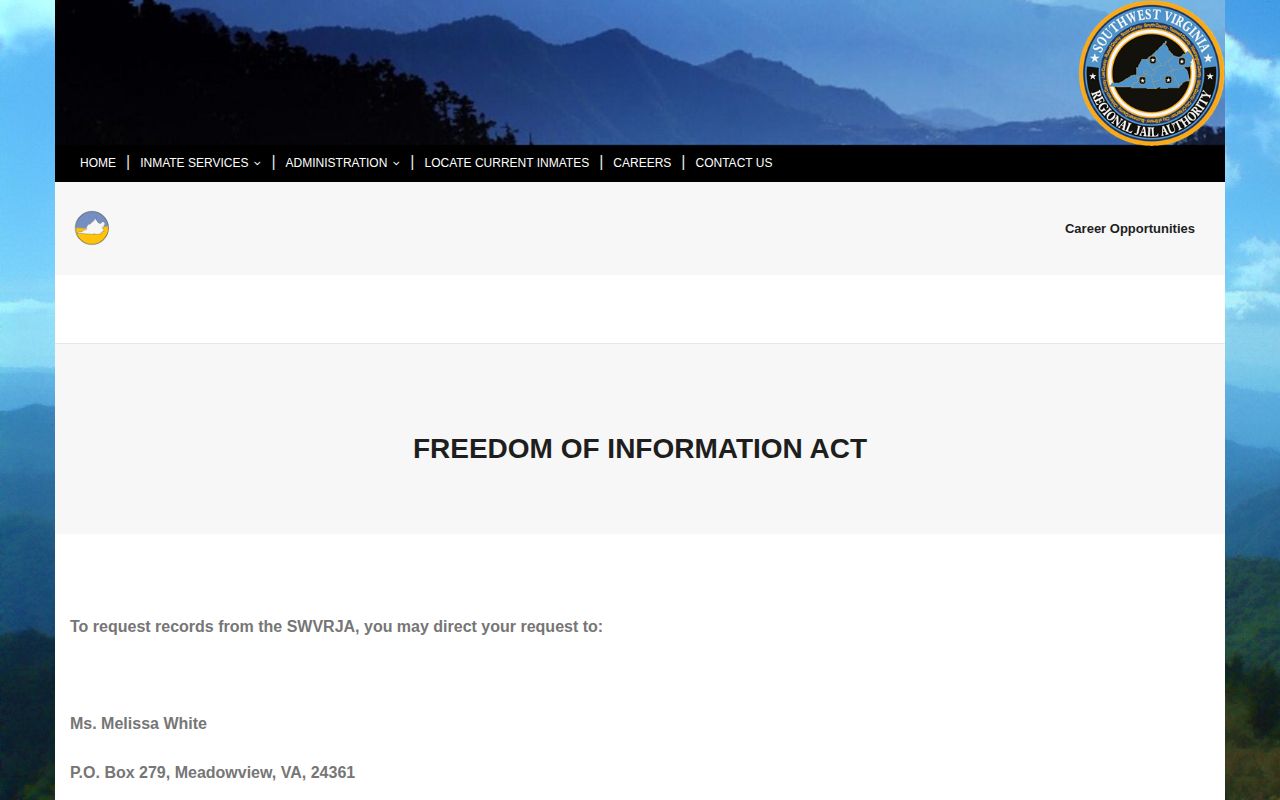
This formal channel preserves the exact date range and can return affirmative release details that the live roster lacks.
Tazewell Release Archive Limits
SWVRJA's current tool offers no authority-published 24-hour or 72-hour view, archive, cadence, or retention promise. This negative finding controls the search design. A person present at the start and absent at the end did not necessarily return to the community between those checks.
The local solution combines three sources. VINE reports a custody event and its type. The court record may explain the legal action. A focused SWVRJA request identifies the physical event and destination. If those records disagree, retain their separate labels and times instead of forcing one guessed narrative.
For example, “bond ordered” can be accurate while release remains delayed by processing or another hold. “No longer listed on SWVRJA's current roster” is accurate when that is the only fact known. “Transferred from SWVRJA to VADOC” describes continued custody. Only a disposition and destination that support community return should be called release to the community.
A VINE alert also has limits. Official materials do not promise how long a released result stays visible. Once a local person enters VADOC, the local VINE registration does not automatically become the separate VADOC Victim Services enrollment. Preserve event details and use the responsible custodian's records for a historical answer.
No SWVRJA inmate mobile app fills the gap. The office of Tazewell County Sheriff Brian Hieatt links an Android app described as a communications, news, and emergency tool, not a 72-hour release service. VINELink has a mobile app for custody notifications, but it is not a sheriff release feed and carries no official SWVRJA publication cadence, archive, or post-release retention promise.
Tazewell Release Status Comparison
The correct next source depends on what happened after the Tazewell jail entry. A three-day interval can include several kinds of custody exits, so the system and wording should follow the destination.
| Observed status | Best next confirmation | Accurate wording |
|---|---|---|
| Still on SWVRJA roster | JailTracker or Jail VINE | Currently listed in regional jail custody |
| Roster exit with community disposition | SWVRJA event plus court order | Released from SWVRJA to the community |
| Moved into state authority | Virginia Department of Corrections locator and release papers | Transferred to VADOC, not yet proven released |
| Unknown roster disappearance | VINE, court review, and SWVRJA request | No longer listed; outcome unconfirmed |
The Tazewell County released-inmate search maps the broader path for one named person, including state, federal, and immigration systems. The 72-hour workflow remains a date-range reconstruction.
Note: A three-day date range organizes the search; it does not turn the current roster into a historical release list.